
.avif)
Epoxy and Polyaspartic Coatings for Decatur Slabs
On a slab this age the system matters less than the bond. We start with a moisture test, because a 1940s pour sitting directly on Georgia clay will push water up through itself for as long as it exists, and a coating laid over that will blister within a year. Where we find it, we prime with a moisture-tolerant epoxy first. Everything else builds on top of that decision.
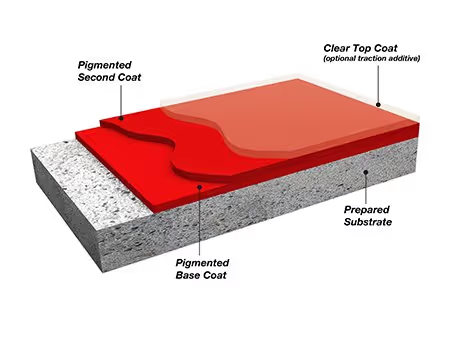
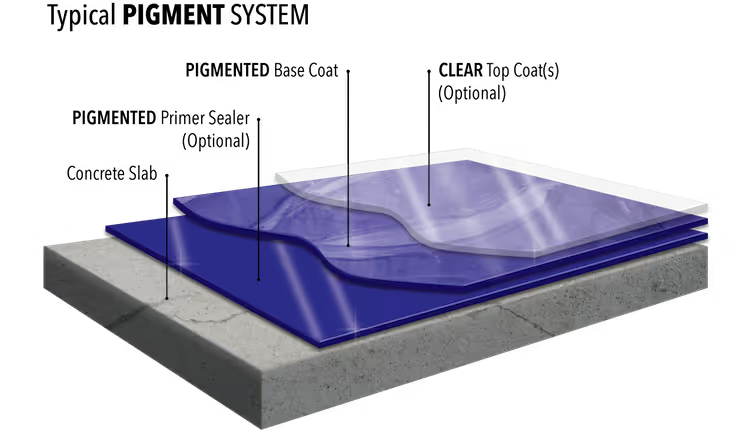
From there it is a pigmented epoxy body coat and a polyaspartic top, the same as anywhere else, but with more filling underneath. Spalling, old anchor holes, and the cracks that come with decades of movement get cut out and patched before anything goes down. An older floor takes longer to prepare and it costs a little more, and it is also the floor that changes the most when it is finished.
.avif)